What Is the Smallest Bra Size? AAA, AA & 28AA Explained

If you're asking what is the smallest bra size, the widely available answer is 28AA — a 28-inch band with a shallow cup where your bust is less than one inch bigger than your ribcage. But go to a specialist and it gets smaller still: AAA cups exist, and a few brands drop below a 28 band. Like the biggest sizes, there's no universal minimum — it depends on the brand and country. Here's the full picture, plus where to actually buy the tiny sizes.
The short answer
For everyday shopping, 28AA is the smallest bra size most people will find on the high street. The AA cup means the difference between your bust and your underbust is under an inch — a genuinely shallow volume. Below that, AAA is smaller again, but it's rare and mostly the preserve of small-bust specialists. So the practical smallest is 28AA; the true smallest, if you count specialist and custom labels, is a 26 or 28 band in AAA. Either way, it's a real, wearable size — not a "no size."
Why there's no single smallest bra size
The reason there's no one answer is the same as at the big end: a cup letter means little without the band. Cup volume is relative to the band, so a 28AA and a 30AAA actually hold almost the same amount — the labels differ, the fit barely does. You can't rank "smallest" by the letter alone.
On top of that, sizing isn't standardised across the world. Brand variation and country conventions mean the smallest size a shop stocks shifts constantly, and availability is really the limiting factor — plenty of mainstream brands simply don't make the tiniest combinations. So "smallest" splits into smallest stocked by a high-street shop versus smallest made by a specialist, and those are different answers.
AAA, AA, A — why the small cups run backwards
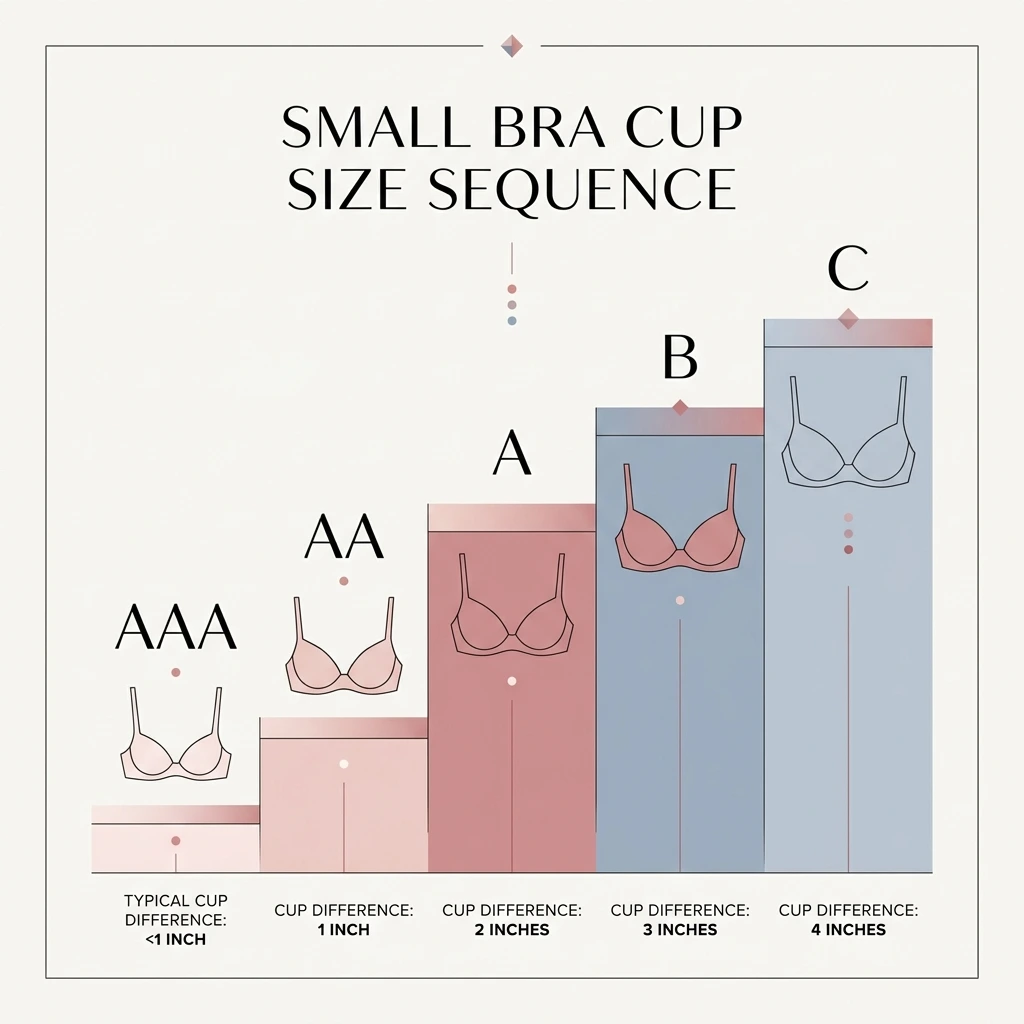
Here's the bit that confuses everyone, so let me make it stick. On the large side, doubled letters mean bigger — DD is larger than D, FF larger than F. At the small end, the opposite is true: the progression from smallest to largest goes AAA, then AA, then A, then B. The A's run backwards. There's no elegant reason for it; it's just an inherited quirk of the sizing system.
What each one means is simple maths. Your cup is the difference — your bust minus band. Under one inch is the smallest cup territory: roughly, less than half an inch is an AAA, around half to one inch is an AA, and about one inch is an A. So if your bust is barely larger than your ribcage, you're in AAA/AA land, and that's completely normal.
The smallest band size (and why the band is the real challenge)
Most people fixate on the cup, but at this end the band is the real problem. Mainstream brands usually start at 28, and only specialty labels go to a 26 band. If you have a narrow ribcage with an underbust around 23–25 inches, a true 28 (or smaller) band is what you actually need — and it's the hard part to find.
The trap is settling for a bigger band because it's easier to buy. Put a 30 or 32 band on a small ribcage and it rides up at the back, shifts around, and makes the straps slip — the exact fit problems described in our bra fit guide that people then blame on themselves. The band is the foundation of any bra; it should sit snug and level. If you can only find your cup in a too-big band, that's a signal to hunt down a specialist rather than compromise on the number.
Where to buy the smallest sizes
Little Women is a specialist retailer with around 35 years behind it, making bras designed from scratch for small busts — starting at AAA cup and from a 28 band, rather than just shrinking a big-bust pattern. Dainty Lady offers AAA cups across a wide band range and is made in the UK. Both understand that a small-bust bra needs different construction, not just a smaller label.
On the high street, M&S, ASOS and similar carry 28 and 30 bands in AA and A, and increasingly stock bralettes and soft styles that suit smaller busts beautifully. The takeaway: if the mainstream doesn't have your exact combination, a petite specialist almost certainly will — you rarely need to go abroad.
Sizing across countries at the small end
Your size label travels differently across systems, so check a chart before buying cross-brand or abroad. A 28AA is usually written the same in the US, but in EU sizing it's closer to a 60AA, and in AU/NZ it's roughly a 6AA. The conversion for the band number is the big change; the small cup letters mostly carry across.
The real headache internationally isn't the maths, it's availability — many brands in other regions don't make small bands with AA cups at all, and some Asian labels start their sizing higher. So when you shop overseas, decode the size chart first and don't assume "XS" equals your fit; a bralette sized S–M can gape badly on a genuinely petite frame.
Sister sizes for hard-to-find small sizes
When your exact size is out of stock, sister sizes are your rescue. Bras with the same cup volume sit on a diagonal: go a band down and a cup up, or a band up and a cup down, and you keep roughly the same volume under a different label. So if you're a 30AAA, your sister size is a 28AA — and those pairs are near-interchangeable.
It's especially useful at the small end because AAA is patchy to find — swapping to the AA near-fit on a smaller band often lands you the same fit in something that's actually in stock. Keep a note of your two or three sister sizes and you'll swap confidently whenever your first choice has sold out.
Best bra styles for a small bust
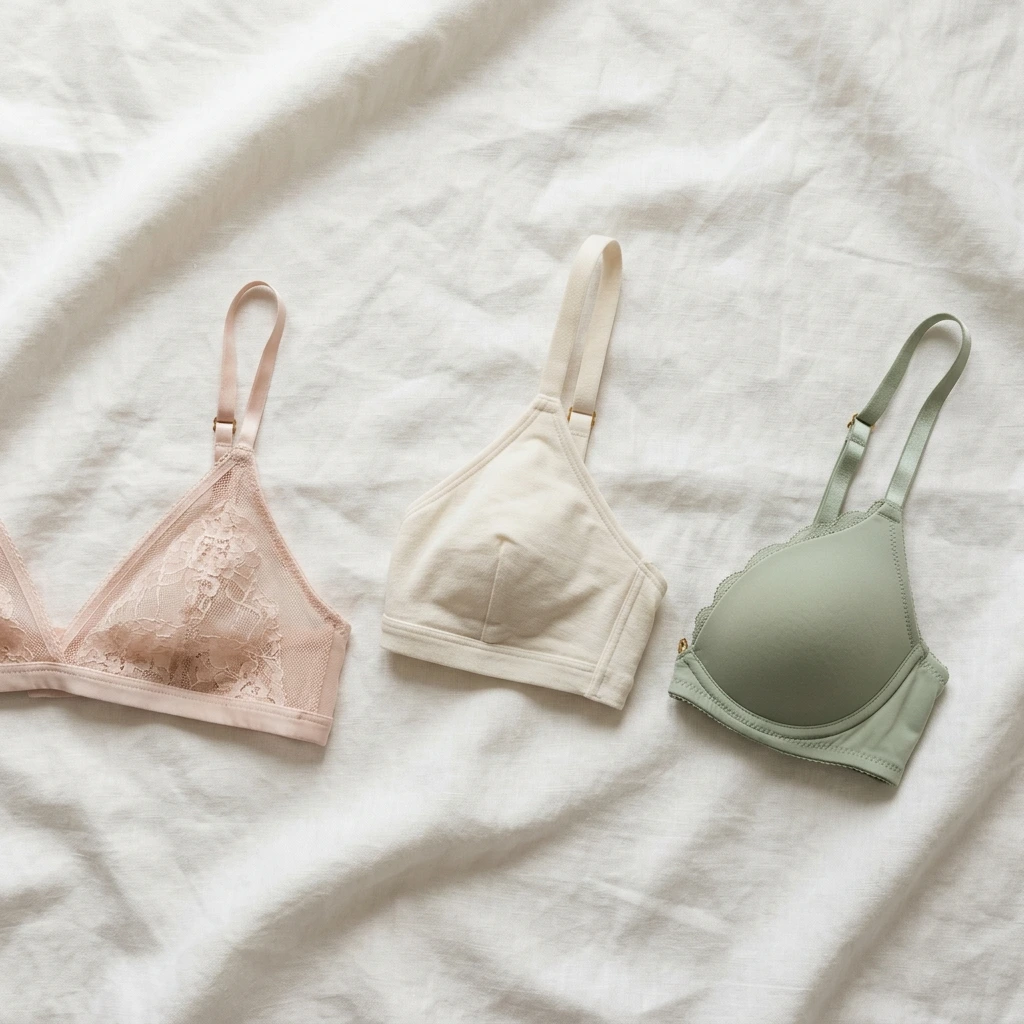
A smaller bust opens up styles that fuller busts can't always wear, so lean into it. Bralettes, soft cup and wireless styles are ideal — with a shallow bust you rarely need heavy underwire support, so comfort-first designs work brilliantly and look effortless. Triangle bras and lightly-lined everyday pieces sit flush and flatter a petite frame.
If you want a bit more shape, a plunge or balconette with light padding adds gentle shape and definition without looking overdone, and a subtle push-up gives a lift for a night out. Adhesive and stick-on styles also work well on smaller busts under tricky necklines, since there's less weight to hold. The point isn't to fake a bigger bust — it's that small-bust wearers have the widest, easiest choice of styles going.
To work out exactly where you land on the cup scale, measure your band and bust and subtract — that one-inch (or under) difference is what puts you in AA or AAA territory, and it's all you need to start shopping confidently.
Frequently Asked Questions
The smallest widely available size is 28AA. Smaller still is AAA (smaller than AA), stocked mainly by small-bust specialists, and a few brands make bands below 28.
Need to check your measurements right now?
Use our free online UK Bra Size Calculator to calculate accurate band and cup sizes in seconds using cm or inches.
Calculate Bra Size Free