Bra Size on Weight Loss Injections: A UK Refitting Guide
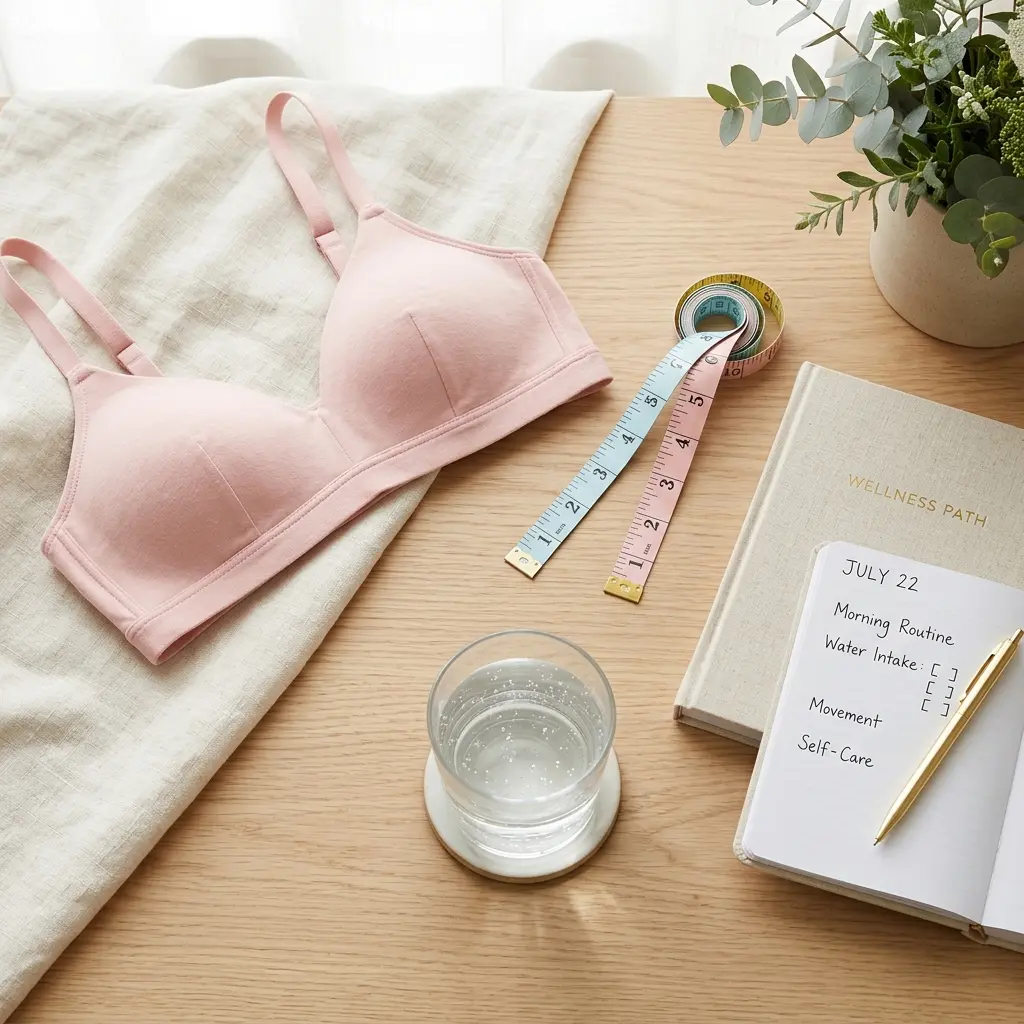
Yes — losing weight on Mounjaro, Wegovy or Ozempic will almost certainly change your bra size, and in most cases your band shrinks before your cups catch up. Expect to drop roughly a band size for every stone or so you lose, remeasure every 4–6 weeks while the weight's coming off, and hold off on splashing out on a full drawer of expensive bras until the loss slows down. Here's exactly what happens, why, and how to stay comfortable and supported the whole way through.
Why Mounjaro, Wegovy and Ozempic change your bra size
Breasts are mostly fatty tissue, wrapped around a bit of glandular tissue and connective tissue. So when you lose fat across your whole-body, your chest comes along for the ride — the same way your face, hips and hands do. That's the short version of what's really going on.
These jabs don't act on your breasts directly. Mounjaro (tirzepatide) works on two hormone pathways, GIP and GLP-1, while Wegovy and Ozempic (semaglutide) are GLP-1 medications. What they share is the effect: they blunt your appetite and slow gastric emptying, so you eat less and steadily shed fat loss from all over. As the fat inside your breasts shrinks, breast volume and density drop, and both your band size and cup size shift. It's the same mechanism whether you're on the jab for type 2 diabetes and better blood sugar control or purely for weight management — and it's identical to what happens with Zepbound or bariatric surgery.
I've fitted plenty of people mid-journey, and the thing I always say first is this: don't read a smaller chest as your body letting you down. It's just fat leaving tissue that was always partly made of it. The job now is keeping you properly supported while the numbers move.
Band or cup first? The "my cup size went *up*" surprise
For most people the band goes first. Your ribcage narrows as you lose fat around your torso, so the underbust measurement that sets your band number drops — often noticeably after the first 10–15 lbs. The cup, which is really just the difference between your full bust measurement and your band, tends to follow more slowly and more gradually.
Here's the bit that catches everyone out. Because your cup letter is a gap between two numbers, if your band shrinks faster than your bust does, the letter can actually go up. Going from a 38C to a 34E doesn't mean your breasts grew — it means the maths moved. This is where sister sizes earn their keep: a 34E, 36DD and 38D all hold roughly the same volume, so knowing your sisters saves a lot of guesswork when a tape measure result looks odd.
Two quick cautions. Old bras that suddenly gape or leave spillage are telling you the shape's changed, not that you measured wrong — trust the fit, not the label. And in the rare case your breasts genuinely feel like they're growing while you're losing weight elsewhere, or one changes far more than the other, that's worth a GP appointment rather than a new bra.
"Ozempic breasts": sagging, deflation and loose skin
"Ozempic breasts" is the nickname doing the rounds for the deflated, hollow, slightly drooping look some people notice after fast weight loss. It isn't a medical condition and it isn't caused by the drug attacking breast tissue — it's rapid loss outpacing your skin.
When fat empties out quickly, your skin elasticity can't always retract in time, so you're left with a fuller "envelope" than the tissue now filling it. Add in the Cooper's ligaments — the internal bands that tether the breast to the chest wall — which naturally stretch over the years, and you get ptosis (the clinical word for sagging). How much you notice comes down to genetics, age, how much collagen your skin still has, and how quickly you lost the weight. Gradual loss is kinder to the skin than a crash; there's a reason clinicians nudge you toward steady, sustainable dosing rather than the fastest possible drop.
A well-fitted bra won't reverse ligament stretch — nothing worn on the outside can. What it will do is lift, shape and contain, so your clothes sit better and you feel like yourself. For most people that's the whole answer. Surgery is a separate, later conversation, and one you shouldn't rush (more on the timing below).
When to remeasure and get refitted during active weight loss
The honest rule: while you're actively losing, remeasure every 4–6 weeks, and get a professional fitting roughly every few months rather than after every single dose increase. British lingerie brands generally suggest a fitting every six months for a stable body — but on the jab your body isn't stable, so shorten that.
Don't wait for the calendar, though. Your bra has already outgrown you if:
- the band rides up at the back instead of sitting level
- you've moved to the tightest hook and it's still loose (a new band should fit on the loosest hook, giving you room to tighten as you shrink)
- the underwire rests on breast tissue rather than your ribs
- the cups are wrinkling or gaping
- your straps keep slipping no matter how you adjust them
Any one of those is your cue to reassess. A good fitter will also tell you when to stop buying — I'd rather someone booked a quick check-in with me in two months than spent a fortune on bras that won't fit by spring. Once your weight genuinely plateaus for a month or two, that's the moment to invest properly.
How to shop for bras mid-journey without wasting money
This is the part the surgeon blogs skip, and it's the one that actually saves you money. Weight loss on these injections runs for months, sometimes a year or more — so kitting out a full drawer at your starting size is money down the drain.
Buy for now, cheaply, and buy few. A soft-cup or wireless style is far more forgiving than a rigid moulded cup as your shape changes week to week. Look for adjustable straps and plenty of hooks so a single T-shirt bra can stretch across a size of change before it's retired. A cheap multipack as a stopgap beats one pricey bra you'll outgrow in six weeks.
Two tricks I lean on. First, keep a sister size down in mind so you can grab the next size without a full refit every time. Second, raid the back-of-drawer — old bras from a previous smaller phase are your free interim wardrobe. Minimiser and heavily structured styles are the ones to avoid buying new right now; they're built for one exact size and won't move with you. Save the proper spend for when the loss settles.
Where to get a free professional bra fitting in the UK
You don't need to pay for this, and a real fitting beats any calculator — a trained fitter watches how the bra actually sits, which a tape on your own kitchen floor can't. Most of the UK high street offers it free.
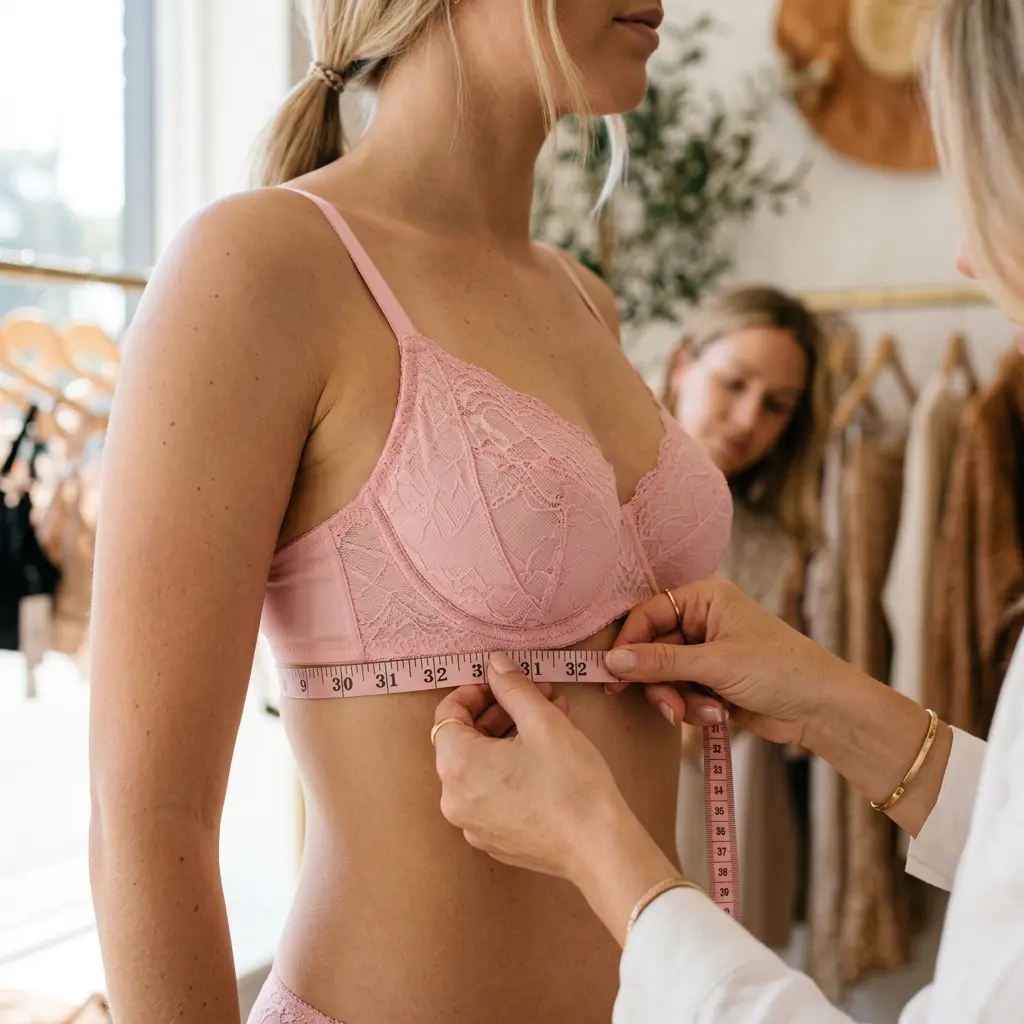
Marks & Spencer (M&S) does free fittings in larger stores and is the default for a lot of people. Bravissimo is the one I'd send anyone with a fuller bust or unusual sisters to — they carry proper extended sizes and their fitters know weight-change bodies well. John Lewis and Boux Avenue both offer free fittings by appointment too, and independent lingerie boutiques are worth the trip if you've got one locally, especially for containment in larger cups. Book an appointment rather than turning up, tell them you're mid-weight-loss, and ask them to note your band and cup so you can track the change. If you're shopping overseas brands online afterwards, just check the UK sizing against an EU conversion chart before you order.
Supporting your breasts and skin while the weight comes off
You can't stop your breasts changing, but a few habits genuinely help. The big one: wear a proper sports bra for anything high-impact. If you've taken up running, jumping or classes to support the weight loss — brilliant — but unsupported bounce stretches those Cooper's ligaments faster than they'd go on their own. That's the one form of "damage" a bra really can prevent.
Beyond that, strength training a couple of times a week won't rebuild breast fat, but working the pectoral muscles underneath — think chest press and push-ups — gives a firmer foundation and a slightly lifted look. Getting enough protein supports your skin and muscle as you lose. Staying hydrated and using a decent moisturiser helps skin quality, and while collagen supplements are popular, the evidence for them is mixed, so don't bank on them. Mind your posture too — months of sitting hunched makes everything look worse than it is.
On surgery: if the change bothers you long-term, the standard advice is the six-month rule — wait until your weight's been stable for around six months before you see a plastic surgeon about a breast lift or anything else, because operating on a body that's still shrinking risks a result that won't last. Plenty of people find that once the loss settles and they're in the right bra, they don't want anything more. Support first, decisions later.
Frequently Asked Questions
There's no fixed threshold, but the band usually starts shifting around the first 10–15 lbs of fat loss. Cups tend to change later and more gradually.
Need to check your measurements right now?
Use our free online UK Bra Size Calculator to calculate accurate band and cup sizes in seconds using cm or inches.
Calculate Bra Size Free