34C Bra Size: What It Means, How to Check Your Fit, and What to Do When It's Off

A 34C bra size means a 34-inch band around your ribcage and a roughly 3-inch difference between that band and the fullest part of your bust — which is what makes the cup a C. It's a moderate, medium size: one cup larger than 34B, one smaller than 34D, and stocked almost everywhere. But here's what actually matters and what most guides skip — a size on a label is a starting point, not a guarantee. So this guide does three things in order: explains what 34C really means, shows you a fast fit test to check whether it's right, and gives you a plain decision map for when it isn't.
What a 34C bra size means
The size has two parts doing two different jobs. The band size (34) is the circumference of your ribcage, measured just under the bust, and it carries most of the support — around 80% of it. The cup size (C) describes volume: the difference between your bust measurement and your band measurement, which for a C runs about 3 inches. The two numbers only make sense together.
This is the piece people miss. A C cup is not a fixed amount of breast tissue. Cup volume is tied to the band, so a 34C holds noticeably less than a 36C and more than a 32C, even though the letter never changes. Someone in a 40C has a visibly fuller bust than someone in a 32C — same letter, different volume — purely because the band grew. Get the band wrong and the letter tells you almost nothing.
A quick anatomy note that pays off later: the gore, that small strip of fabric between the two cups, should sit flat against your breastbone. When it tacks down cleanly, your band and cup are usually cooperating. When it floats, something's off — which is exactly what the fit test catches.
34C measurements in inches and centimeters
Two numbers define a 34C. Your snug underbust should land around 29–30.5 inches (roughly 74–78 cm) — that's what gives you the 34 band. Your bust, measured across the fullest point, sits near 37 inches (about 94–97 cm). Subtract band from bust and you're looking at that ~3-inch difference that maps to a C cup.
Treat those figures as a range, not a verdict. Tape tension, posture, and breast density all shift the result, which is why a bra size calculator gives you a starting estimate and never a final answer. The number gets you into the fitting room. Whether 34C actually works is decided by how the bra sits on your body, not by the math.
Is 34C big or small? How it looks on different bodies
Call it medium. A 34C is a moderate, balanced size — larger than 34B, smaller than 34D — and it reads as a soft, natural curve on most frames. It's genuinely common among medium-framed bodies, so if you measured into it, you're in ordinary company.
How it looks, though, depends far more on your frame and breast shape than the number suggests. On a petite build, a 34C can look full and prominent. On a taller or broader frame, the same tissue reads more modest. And shape steers the fit: if you're full on top, the upper cup edge may feel tight; if your breasts are shallow or wide-set, you might see a small gap even when the size is technically right. That's a shape to fit around, not a failure — and it's the reason two people who both measure 34C can need completely different bras.
How to check your 34C fit (the fit test)
Skip the mirror-and-hope approach and run an actual check. Start with the band, because it does the heavy lifting. It should sit level all the way around — parallel to the floor, not dipping in the back — and feel snug but never painful. Test it on the loosest hook when the bra is new; that leaves room to tighten as the elastic relaxes over months. If you need the tightest hook on day one, the band's already too loose.
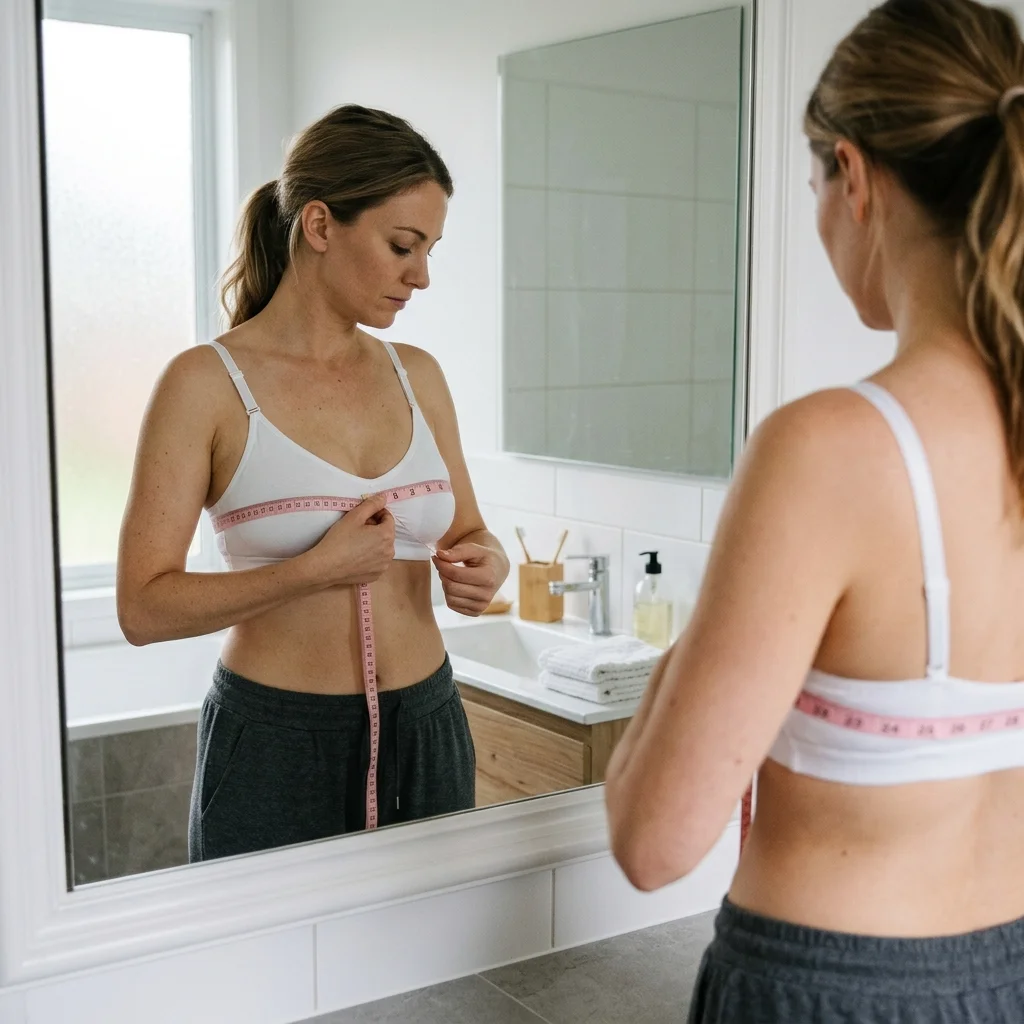
Now the gore: it should tack flat against your sternum. If you can slide a finger behind it and it lifts away, the cup or band is fighting you. Then the cups — they should fully contain the breast with no spillage over the top, sides, or near the underarm, and no empty gaping or wrinkling at the upper edge. Finally the straps: they carry maybe 20% of the load, so they shouldn't dig trenches into your shoulders or slip off constantly. Either problem usually points back to the band, not the straps.
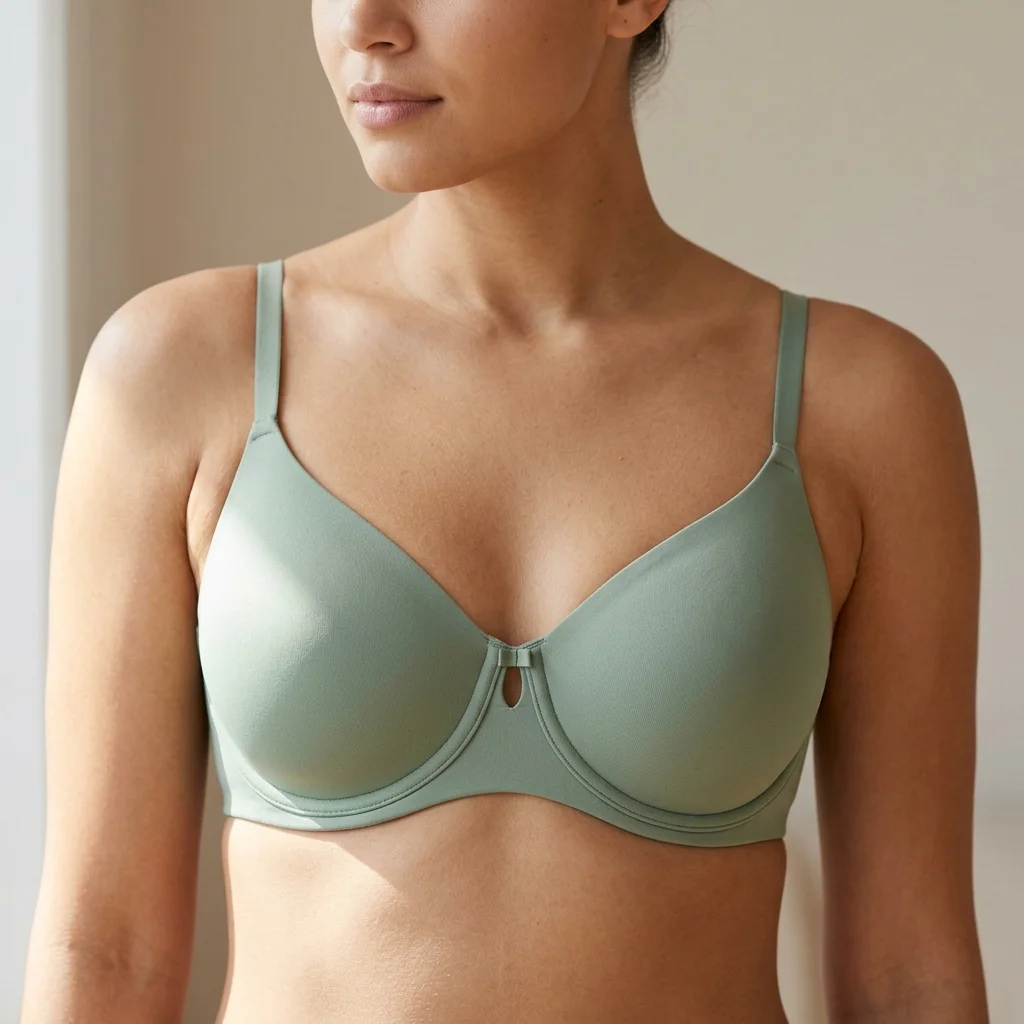
One honest reality check I give everyone: a bra that fits should be forgettable. If you're aware of it twenty minutes in — adjusting, tugging, shifting it back into place — that's a fail, no matter what the tag says.
What to do when your 34C is off
Here's the part the other guides bury. When a 34C is close but not right, fix it in a specific order: band first, then cup. Get the band sitting correctly, and most cup problems either disappear or become obvious. Use this as a decision map.
Cups overflow at the top, sides, or underarm? That's not enough volume — go up a cup to 34D. Cups gape or wrinkle with empty space at the top? That's too much volume or the wrong shape — drop to 34B or try a different cup style. Band rides up your back, shifts when you move, or already needs the tightest hook? It's too loose — this is a sister size job: try 32D, which keeps the cup volume but pulls the band tighter. Band digs in, leaves deep marks fast, or restricts your breathing? Too tight — go to 36B, the looser-band sister size.
And the case that stumps people: if both the band and the cup feel wrong, sister sizing won't rescue you. Re-measure and change both. Sister sizing only re-homes the same cup volume onto a different band — it can't invent volume you don't have or shed volume you do. When the whole size is off, start over rather than shuffling sizes hoping one lands.
34C sister sizes: 32D and 36B (and when they help)
Sister sizes are sizes that hold the same cup volume but redistribute it across a different band. For a 34C, the two closest are 32D (tighter band, same volume) and 36B (looser band, same volume). Extend the family and you'll also see 30E and 38A listed, though those get further from your true fit the more bands you move.
Now the catch nobody warns you about: same volume does not mean identical fit. When the band changes, the wire width and cup geometry change with it. A 32D has narrower, deeper cups; a 36B has wider, shallower ones — same amount of tissue, different container. So sister sizing works beautifully for some breast shapes and poorly for others. Reach for it when your cups fit but the band's off, or when a specific brand runs consistently tight or loose. Just try before you commit — the label promises volume, not comfort.
34C vs 34B vs 34D
Since the band stays at 34 across all three, the only thing moving is cup depth. A 34B holds about an inch less volume — same band, shallower cup. If your 34C gapes at the top with air to spare, 34B is often the honest answer. A 34D holds about an inch more, for fuller busts and more projection; if your 34C spills, size the cup up to 34D before you touch anything else.
Don't confuse a bigger letter with a bigger band, either. A 34C and a 36C are not the same cup — the 36C has a larger band and therefore more actual volume. The letter is only meaningful next to its number.
Why your 34C fits differently across brands
If a 34C fits like a glove in one label and like a stranger in the next, you're not imagining it. Brands grade their sizes differently: cup grading, wire width, fabric stretch, and whether the cup is molded or unlined all shift the real-world fit. A 34C in one brand can genuinely run like a 32D or 34D in another.
Molded cups hold their own shape, so if your breast doesn't match that mold, the bra can gap or press flat even at the "right" size — unlined and lightly lined styles adapt more honestly. There's also a system quirk worth knowing: UK sizing gets more granular than US above a DD, and specialty brands often use it, so check which system a label runs before ordering across regions. The takeaway I stand by: fit the bra, not the tag.
How often to re-check your size
Your size is not permanent, and this is where a lot of otherwise-careful people go wrong — they measure once and wear that number for a decade. Re-check every 6–12 months as a baseline. Fit drifts gradually, so it's easy to keep wearing a size that quietly stopped working.
Check sooner after any real change: pregnancy, breastfeeding, a weight shift up or down, menopause, or starting a new medication that affects your body. Any of these can move you a cup or a band without warning, and the bra that felt perfect last year may be the thing digging into your ribs now.
Best bra styles for a 34C
At this size you have real range, so match the style to your shape and your outfit, not just the occasion. For daily wear under fitted clothes, a lightly lined T-shirt bra is the workhorse — seamless, smooth, invisible under a plain top. A balconette or demi lifts from below and flatters wide or lower necklines. Prefer minimal structure? A wireless bra or bralette is comfortable and low-key, and C cups carry wire-free support reasonably well.
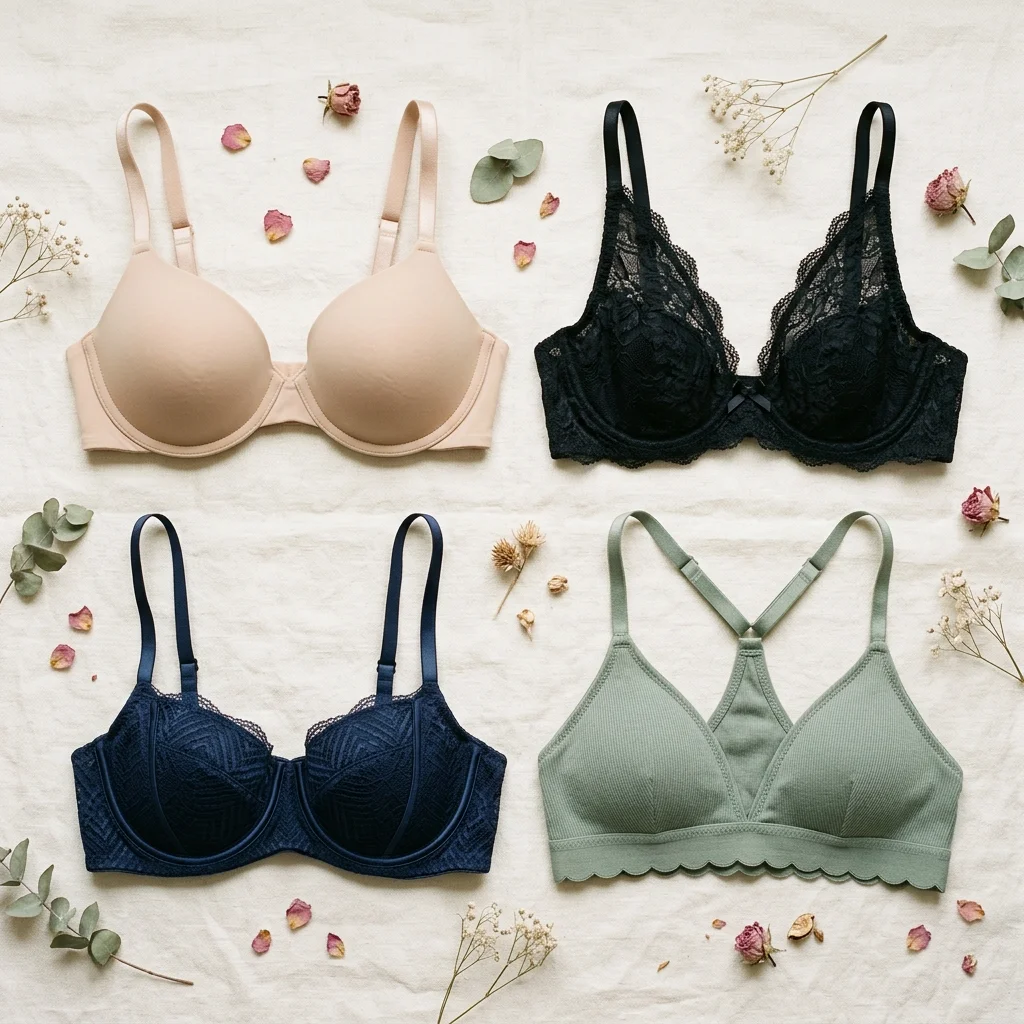
Match the style to your shape, not just the occasion. If your tissue sits wide on the chest, plunge bras and side-support styles guide it inward and centered. If it projects forward, seamed cups, stretch lace, or a deeper plunge stop molded cups from wrinkling or pressing flat at the base. Want more cleavage for a night out? A push-up with light padding rounds and centers. The rule I keep coming back to: buy the shape that matches how your breasts actually sit, and let 34C be the starting point — a bra that fits should feel light, stay put, and stop demanding your attention.
Frequently Asked Questions
No — it's a medium, moderate size. Larger than 34B, smaller than 34D, and one of the more commonly stocked sizes.
Need to check your measurements right now?
Use our free online UK Bra Size Calculator to calculate accurate band and cup sizes in seconds using cm or inches.
Calculate Bra Size Free